
Why Is Emulsifying Wax a Must-Have for Stable Cosmetic Formulas?
What Is Emulsifying Wax?
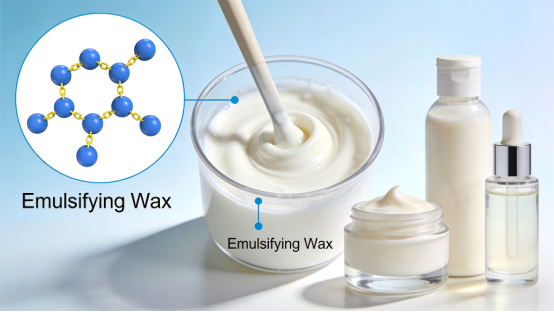
| At its core, emulsifying wax is a blend of waxes (vegetable-based or petroleum-derived) and surfactants that enables the mixing of oil and water—two substances that naturally repel each other. According to the United States Pharmacopoeia-National Formulary (USP-NF), the primary components of cosmetic-grade emulsifying wax (often labeled “Emulsifying Wax NF”) include Cetearyl Alcohol and polysorbate derivatives, which work together to form a stable emulsion. Unlike regular waxes, it doesn’t just add thickness; it acts as a “bridge” between immiscible ingredients, preventing separation, creaming, or clumping over time. Cosmetic-grade emulsifying wax typically has a neutral odor, off-white color, and melts between 50-55°C, making it easy to integrate into various formulations. Its pH range of 4.5-6.0 also aligns with the skin’s natural acidity, ensuring compatibility with most cosmetic ingredients and minimizing irritation risks. | 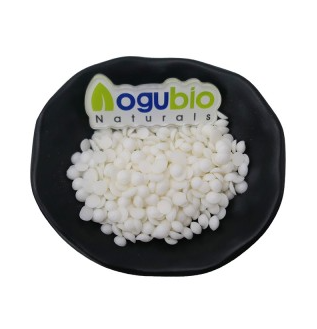 |
Key Features and Advantages of Emulsifying Wax
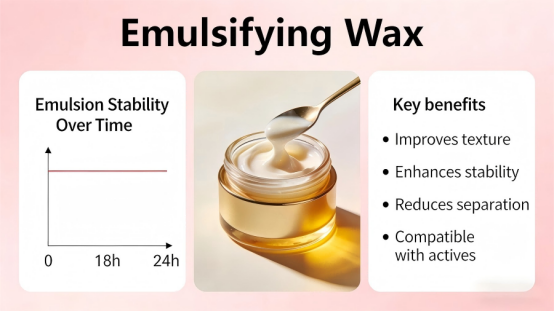
Unmatched Emulsion Stability: The biggest advantage of emulsifying wax is its ability to create long-lasting, stable mixtures. A 2025 study published in the International Journal of Cosmetic Science found that formulations containing 5-10% emulsifying wax maintained homogeneity for 12+ months, even under extreme temperature conditions (from 0°C to 45°C). Unlike low-quality emulsifiers that break down over time, emulsifying wax forms a flexible, protective film around oil droplets, locking them into the water phase and preventing separation.
Easy to Use and Versatile: Formulators love emulsifying wax for its user-friendly properties. It dissolves easily in both hot and cold water, requires no pre-dilution, and mixes seamlessly with Cationic, non-ionic, and most anionic ingredients. This versatility makes it suitable for everything from lightweight lotions to thick body butters, hair conditioners, and even makeup products like concealers and cream blushes.
Safety and Skin-Friendliness: Decades of research confirm the safety of emulsifying wax in cosmetics. The Cosmetic Ingredient Review (CIR) Expert Panel first evaluated it in 1984, reviewing over 35 animal and human studies, and found no significant irritation or adverse reactions. A 2003 follow-up review noted its use in 102 cosmetic products and reaffirmed its safety profile. Additionally, natural variants (like those made from rhus wax and polyglyceryl-3 stearate) are vegan, cruelty-free, and biodegradable, meeting the growing demand for sustainable ingredients.
Enhances Product Texture and Performance: Emulsifying wax doesn’t just stabilize—it improves the user experience. It thickens formulations to a luxurious, spreadable consistency, reducing greasiness and ensuring even application. A 2023 study in Journal of Pharmaceutical Sciences found that emulsifying wax-based emulsions had a lower friction coefficient, making them feel smoother on the skin compared to formulations using other emulsifiers. It also boosts the efficacy of active ingredients: a 2025 study showed that lidocaine release was 30% higher in stable emulsions made with emulsifying wax (held at 35°C during formulation) than in unstable counterparts.
Wide-Ranging Applications in Cosmetics
Emulsifying wax is a staple in nearly every emulsion-based cosmetic product. Here are its most common uses:
Skin Care: It’s the backbone of lotions, creams, moisturizers, and body butters, binding hydrating water-based ingredients (like hyaluronic acid) with nourishing oils (like jojoba or argan oil). For example, a facial cream might use 3-5% emulsifying wax to create a lightweight yet moisturizing texture that doesn’t separate in the bottle.
Hair Care: In conditioners, hair masks, and styling creams, emulsifying wax stabilizes oil and water phases, reducing frizz and improving manageability. It also helps conditioners adhere to hair strands, enhancing softness and shine without weighing hair down.
Makeup: Cream foundations, concealers, blushes, and lipsticks rely on emulsifying wax to maintain a smooth, consistent texture. It prevents color separation and ensures the product glides on evenly, lasting longer on the skin.
Specialty Products: It’s used in sunscreens to stabilize UV filters (which are often oil-soluble) with water-based ingredients, ensuring uniform protection. It also features in baby products and sensitive skin formulations, thanks to its gentle profile.
Research Backing: Why Formulators Trust Emulsifying Wax
The effectiveness of emulsifying wax is supported by rigorous scientific research. A 2025 study titled “The Effect of Process Parameters on the Microstructure, Stability, and Sensorial Properties of an Emulsion Cream Formulation” found that emulsifying wax was the key factor in emulsion stability—even more so than processing parameters like homogenization speed or cooling rate. The study concluded that using 5-10% emulsifying wax (with an oil phase below 15%) and a holding temperature of 35°C during formulation yielded the most stable, high-performing emulsions.
Another 2025 study, “Investigating the Behavior of a Natural Emulsifier in One-Pot and Standard Cosmetic Emulsions,” tested a natural emulsifying waxand found it effectively stabilized oil-in-water emulsions using both standard and “one-pot” manufacturing methods. This is significant for manufacturers, as it allows for flexible production while maintaining product quality.
For formulators prioritizing safety, the CIR’s two landmark reviews provide definitive proof of emulsifying wax’s safety at typical use concentrations. These reviews are widely cited in the cosmetic industry and are recognized by regulatory bodies worldwide.
Conclusion: The Non-Negotiable Ingredient for Stable Cosmetics
In a market where consumers demand consistent, safe, and high-performance products, emulsifying wax delivers on all fronts. Its ability to stabilize oil-water mixtures, enhance texture, and ensure safety makes it irreplaceable for cosmetic formulators. Whether you’re a brand creating a new moisturizer or a consumer curious about what’s in your favorite products, emulsifying wax is the unsung hero that makes stable, luxurious cosmetics possible. As the cosmetic industry grows (projected to reach $712 billion by 2030), the demand for reliable emulsifiers like emulsifying wax will only continue to rise—proving it’s not just an ingredient, but a must-have for modern cosmetic formulas.
- Name: Yuki
- E-mail: sales02@nahanutri.com
- WhatsApp:+8618066950297